


On 8 April, the current Senedd term will come to an end. Business will stop. Meeting rooms will fall silent. The Siambr will be empty. While official Senedd business pauses at this time, behind the scenes Senedd staff are busy working to make sure everything is ready for the arrival of new Members of the Senedd in May.
In this blog, colleagues share what they do and how they’re preparing to support a brand new Senedd.
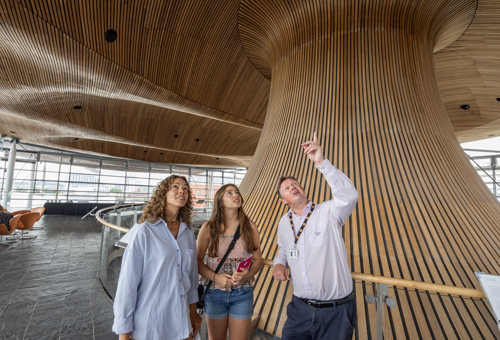
I started working for the Senedd (then the National Assembly) in 2006, and so much has changed since then. We’ve seen several First Ministers, including our first Black and first female leaders, and we became the first parliament with full gender parity back in 2003. Now we are preparing to welcome 96 Members in May.
As an Education and Youth Engagement Officer, the biggest shift I’ve seen is that the young people I teach today have never known a Wales without a Parliament.
Every week we meet young people here at the Senedd, or I visit them, to explain how democracy works and how decisions made at the Senedd impact on them, their families, and their communities.
This year, much of our work has focused on first-time voters. My colleagues and I have travelled up and down the country visiting hundreds of schools, colleges and youth groups to help young people understand the voting process - how to register, what manifestos are, different ways of voting, and why their vote matters.
I love it! To work with such enthusiastic young people is so inspiring. On one recent school visit, a pupil asked why we use a cross to vote: “A cross means wrong! Why not put a kiss next to the party you like?”
I told the student that I didn’t mind if she called it a cross or a kiss, as long as she used her vote. I also told her that my grandmother remembered a time when she, a woman, wouldn’t have been able to vote because of her gender. A lot has changed, but I think whatever happens on 7 May this will be one of the most exciting elections in my lifetime.
Listen to Richard talking about his role on BBC Radio Cymru.
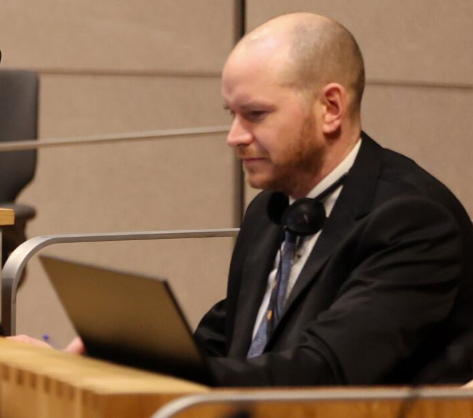
I’m a Plenary Clerk working in the Chamber Secretariat. As a team, we prepare for and support Plenary and Business Committee meetings each sitting week. When it comes to Plenary, we are responsible for preparing all the key documents for the Llywydd (Presiding Officer) and Deputy Presiding Officer to chair those meetings effectively. We also publish information relating to Plenary meetings for the benefit of Members, their staff and the public.
My role includes supporting the Llywydd and Deputy Presiding Officer in the Siambr itself, ensuring that the information they have to hand is accurate and up to date. I work with other clerks and teams to tackle any technical or procedural issues as they arise.
Outside of plenary meetings, I am involved in the development of procedures and procedural resources, which are important in setting out the way parliamentary business is conducted.
Parliamentary procedures are the rules which ensure fairness and govern how Members of the Senedd debate, scrutinise the Welsh Government, and pass laws. These are set out in the Senedd’s Standing Orders.
Ahead of the Seventh Senedd, the move back to the Siambr was navigated successfully in February and work on the new meeting management software for Plenary is ongoing. We are also preparing for early business immediately after the election, so that the appointment of the Presiding Officer and Deputy Presiding Officer, and nomination of the First Minister run smoothly.
Listen to Aled talking about his role on BBC Radio Cymru.
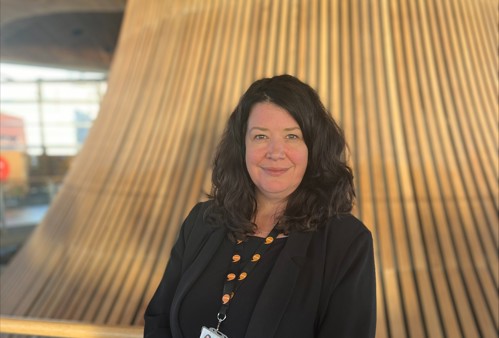
The Events and Engagement Team plays an important role in informing the public about the work and role of the Senedd.
We carry out activity that puts the Senedd at the heart of Welsh public life, as a building and as an institution, through events at the Senedd and meeting with communities across Wales.
May’s election has given us a clear focus for this year – to communicate the changes that are underway and to engage with diverse audiences and communities from all across Wales.
We have had an extremely busy year and have been able to visit all 16 of the new constituencies at least once. The visits have been a mix of festivals, locations and events including: university freshers’ fairs, the Urdd Eisteddfod, the National Eisteddfod, the Royal Welsh Show, shopping centres, libraries, agricultural shows, and food festivals, to reach people who are normally not involved in politics.
The responses to the changes from the public have been mixed... some in favour, and others against. Our role is to raise awareness and understanding of the Senedd. So even if someone doesn’t agree with the changes, they will have a better understanding of why they are happening and how the Senedd works after a conversation with one of the team.
As we prepare for the Seventh Senedd, we are looking forward to working with the new Llywydd (Presiding Officer) and continue to deliver a programme that inspires, engages and communicates with communities across Wales. We continue to create opportunities and look for new ways of engaging with the people of Wales.
Listen to Angharad talking about her role on BBC Radio Cymru.
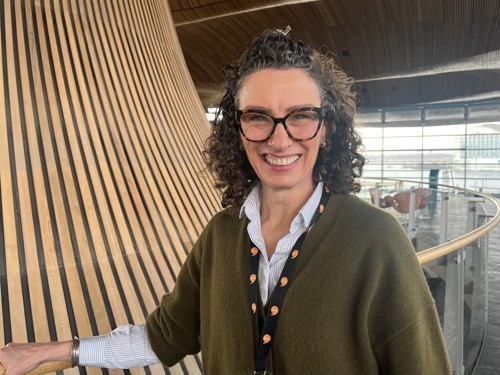
As Head of Member Liaison, I oversee a team responsible for supporting Members in their roles. This includes learning and development as well as engagement services for Members and their staff.
A core part of my role is ensuring that the Senedd Commission places Members’ needs at the heart of its thinking, particularly in how services are designed, delivered and improved. By championing a Member‑centred approach, I help shape support that is responsive, accessible and aligned to the realities of Members’ work.
For the next Senedd, I will play a central role in delivering a welcoming and cohesive induction for newly elected and returning Members. This will be especially important as the expansion of the Senedd and a turnover of the present cohort of Members means that there will be a high number of new Members in May.
I will oversee our Member-facing presence immediately after the election, ensuring that every Member is made to feel welcome and provided with the right information from the moment they arrive. My team will coordinate training to help Members understand their responsibilities, available services and key operational processes, while directing the induction learning and development programme delivered by our various service areas and external trainers.
A key element of this induction is the Hwb – offering for the first time a physical space on site for in‑person information, advice and support, and also the new name for the Members’ intranet. The Hwb brings together a single, modern gateway where Members can access guidance, resources and digital services both online and face‑to‑face.
‘Hwb’ is also a play on the English word ‘hub’ and the Welsh word ‘hwb’ meaning encouragement. It is our intention that the intranet and Hwb room will fulfil both meanings.
By providing the right support at the right time, we aim to help Members carry out their duties with confidence and ease.
Listen to Joanna talking about her role on BBC Radio Cymru.
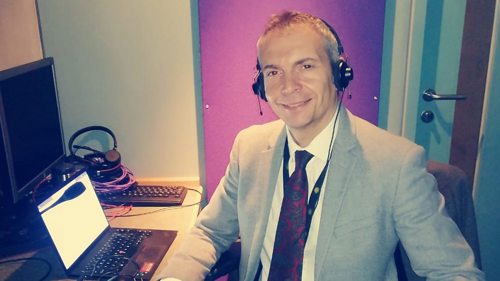
There are four discrete strands to the work carried out by staff in the Translation and Reporting Service (TRS), and my responsibilities engage directly with three of these.
My main job, which I do every week, is to provide live interpretation for Plenary and committee meetings. My other duties, which I alternate on a fortnightly basis, are to translate the various documents that must be published bilingually under the Official Languages Scheme; and to transcribe Plenary and committee meetings for the Record of Proceedings.
In the run-up to the election, nothing much has changed in terms of the substance of our work (although the torrent of end-of-term legislation has been pretty intense for everyone).
There has, however, been a noticeable change of emphasis in terms of content and nuance. For example, there is a distinctly more political flavour to exchanges in the Siambr as the rival parties road-test elements of their manifestos. This naturally brings its own challenges for those occupying our shiny new interpretation booth. Meanwhile, in the world of text translation, we have been doing a lot more forward-looking content about the election itself and the possible scenarios that may unfold in the Seventh Senedd. At all events, we are all gearing up for the challenges that lie beyond the deceptive calm of dissolution.
Listen to Cai talking about his role on BBC Radio Cymru’s Dros Ginio programme.
Visit our election hub to find out why the election matters and how your vote can shape the future of Wales.